François Zavier analysis

Thursday, 30 May 2013 | |


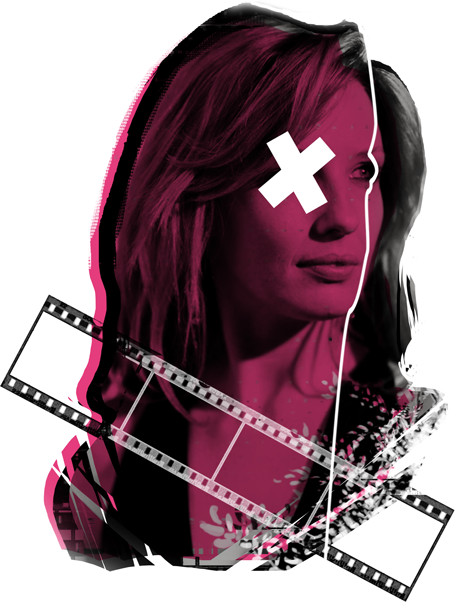
Canadian artist François Zavier has a very interesting body of work. He does a lot of mixed media work, experimental typography and stop motion animating. I found him through his "the worst is yet to come" series, in which he uses heated wires to burn through papers with motivational sayings. It's a unique concept, and to me, it's an interesting way to visually portray anxiety and depression.

Initially I only saw François' photographs from the series, but afterwards I saw he also had a video on his website. The video is even more interesting to watch, because you watch the words form and slowly burn through the paper. I also noticed he's used .gifs to present his work several times, and decided to make a gif of his video. This kind of work is perfect for .gifs because, while you can enjoy the work as a still image, a short clip of the process will make you appreciate it even more.


David Szauder analysis

| |

"Gil"


I've been interested in glitch art for quite a while, and I when I found David Szauder's work I was inspired to finally make my own. He has a series of pictures called Lost Fragments - Failed memories that explores how our memory works through glitch art. He creates the pictures digitally, presumably in photoshop, and tries to make it seem like a video card glitch, but with less colors.

my experiment
The pictures from the series are mainly portraits, so they have a good composition that focuses on the face of the person. He's tried to keep his pictures looking vintage by keeping the limited color scheme, but for my experiment I added as much color as possible. By changing the colors I also intentionally changed the mood of the picture. The original picture had a more innocent look, and with my collage it's the opposite - the green/yellow color scheme is now purple/red/blue.I also added a slight 3D effect by editing the layer channels. I love doing digital collage, so I'll happily do more of this in the future.


evaluation

Friday, 10 May 2013 | |


Interpreting the theme

I wanted to experiment with paper and create a small zine with a vintage theme. I planned to focus on the more glamorous part of the 40s and 50s, like the pin-ups and hollywood actors and actresses. The glamorous image of the 40s and 50s often obscures the war and economical situation at the time.

I wanted to create a vintage, 50s related zine, so I plan to include envelopes and family photographs. Envelopes are obscuring the contents inside, and photographs have a different meaning to myself that is hidden and unknown to others. 


Recording observations
I recorded my observation in my sketchbook and digitally on my blog. I made a lot of experiments with different materials traditionally in my sketchbook. I used photoshop for my digital experiments with collage.

Idea development
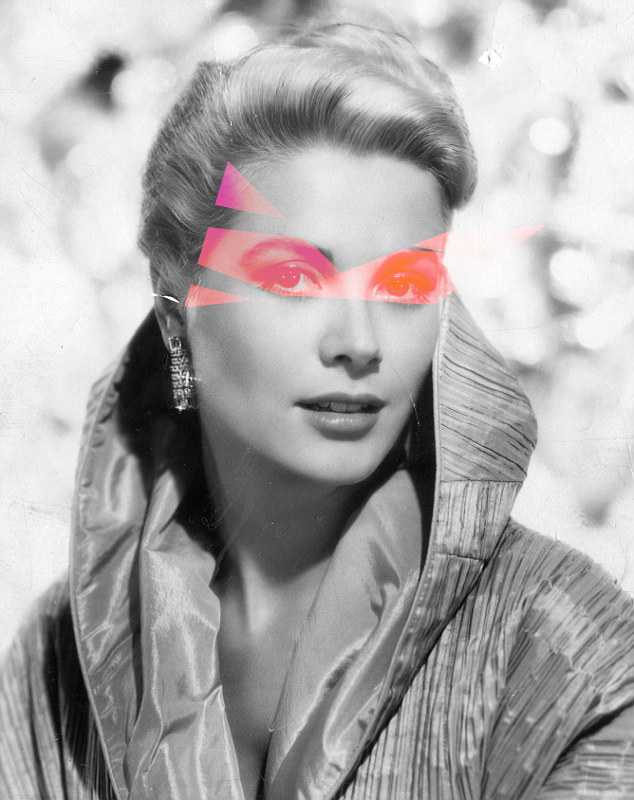
Because I wanted my zine to be interesting to look at, I wanted to use a variety of techniques and materials. The idea I developed the furthest is my pin-up drawings. I copied a lot of pin up paintings and drawings, which helped me a lot to draw more freely in that style. Another idea I had was to create digital collages in photoshop with portraits of actors and actresses from the 50s. I took a lot of black and white photos and added colorful geometric shapes. It's quite simple but very effective when used with the right colors. An idea I discarded was to put tracing paper over photographs and draw on top of them. I experimented with it a lot, using different mediums to draw like pencil, marker and ink, but it didn't look as good as I wanted it to be.


Materials, Techniques and Processes
I've used a wide variety of materials in my sketchbook. I've used pencil, watercolor, marker, ink, marker and charcoal. I've combined them most of the time. For example I've used ink to add outlines after a watercolor drawing has dried. I've also done a lot of digital collages in photoshop. I started out by only adding triangles and other shapes around the person's eyes, but for my final piece I plan to draw bigger shapes. I'm more comfortable with photoshop, but because I practiced a lot with watercolor and pencil I'm much more comfortable with traditional mediums now too.

Influences 
I've been most influenced by 40's and 50's American culture. The pin-up art, the war, and the golden age of hollywood. I've always been interested in vintage American commercial art, so for the project I decided to research those two decades further. My biggest artistic influences would be George Petty, Gil Elvgren, Andrew Loomis, Norman Rockwell and Geraldine Georges. Elvgren and Petty are very famous pin up artists and their style of painting appeals to me a lot. Norman Rockwell is a defining figure in American art, looking through his paintings really help me to get a feel for the 40s and 50s. Andrew Loomis is famous for the paintings he's done in advertising and also has several drawing books that i've read to help me draw in a 40s style. Geraldine does very interesting, gothic-looking digital and mixed media collages. He's inspired me for my own digital collages.
The exam trip to the Photographers Gallery didn't inspire my ideas that much because they didn't fit the theme I set for myself. Nonetheless it was interesting to see.
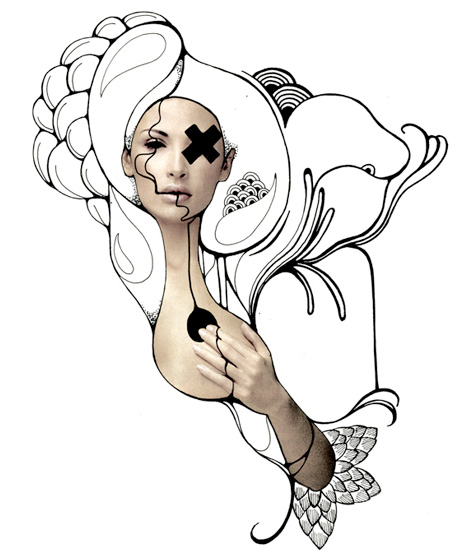
Geraldine Georges collage
my own work, inspired by Georges


Final Piece
For my final piece I intend to create a small zine with a vintage theme. I want to use envelopes, textured paper, and both digital and traditional collage. I also want to include my pin-up drawings, and a drawing of a 50s actor or actress to accompany the digital collage.  

Conclusion 
 I enjoyed working on the exam because I set myself a very clear theme from the beginning. I have been interested in it for a long time so researching it was very enjoyable and my drawings and collages have improved since.

Wednesday, 1 May 2013 | |


little digital experiments

George Petty analysis

Wednesday, 24 April 2013 | |


George Petty is a pin-up artist from the 1940s - 50s. His work had a major contribution to the "Pretty girl" era. He's worked for magazines such as Esquire and Playboy, and his art was widely used on airplanes as "nose art".
The pin-up is a defining art style in America in during 40s. Millions of men, most 18-20 years old, were sent off to fight in the second world war. During that time pin up girls, in both photographic and drawn form, because most popular. They were used to boost the solider's morale, and generally remind them of home.
There's several defining pin-up artists - perhaps most famously, Gil Elvgren, Rolf Armstrong, George Petty and Art Frahm. What sets Petty's work apart is his more exaggerated style.
George Petty Calendar Pin up
Gil Elvgren pin up
Pin up artists generally tend to exaggerate anatomy by making the legs longer and the waist smaller, but they still try to keep them looking realistic. Gil Elvgren is a great example of a more realistic pin-up. His oil paintings have realistic rendering and only slightly exaggerated anatomy and poses. Compared to Elvgren, Petty's girls look a lot more cartoony. They often look innocent and shy, and they have longer legs and slightly bigger heads compared to Elvgren's. His pin ups are also more simplified in terms of background and color palette. Gil usually has some kind of background to his paintings, making them have more of a narrative. Petty's paintings are stand alone, classic pin up girls. That makes Petty's work perfect for "nose art"


Nose painting means painting a picture on the side or the nose of an airplane. It was common in WW2; pilots used it to personalize their airplanes and to make them easier to recognisable for friendlies. They tend to be painted by civilian artists or other servicemen. Petty's art was perfect for it because his figures are simplified, therefor easier to draw.
His works relates to my outcome because I'm basing it on pin up art.  His style is very interesting and skilfully stylised. 


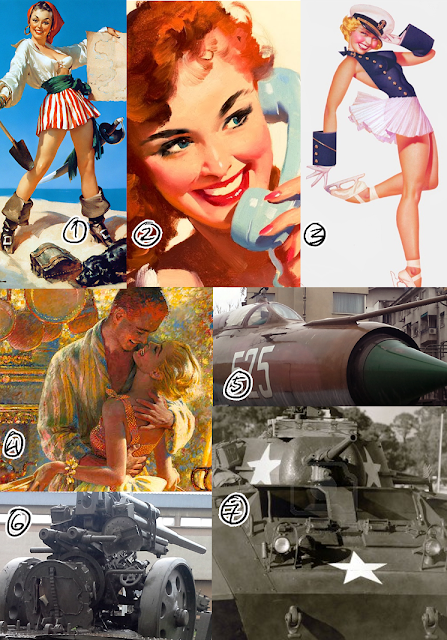
moodboard

Sunday, 14 April 2013 | |


1, 2 Gil Elvgren pin ups, bright colors
3 George Petty pin ups, stylized anatomy
Edwin Georgi, pin ups with narrative, advertising and American media in the 40s
5, 6 military, weapons and aircraft, war. my own photos
7 military, tanks, war


collage experiments 2

| |


I used this photo that I took of my sister for the collages. I took several others but this one fit best, because when converted to a stencil you can still make out the features of the face. The other photos had low contrast  and were too dark or too light when adjusted.

These are all digital experiments, done in Photoshop CS5. I used this method to separate the lines from the white background. I made a layer underneath and tried different bases for the collage - plain brown for the top row, and two textures for the bottom row. In the top row I tried to experiment with color. The stripes are all cold colors, and the background is a washed out brown.
The second row is the opposite - I experimented more with the shapes; and the colors are mainly warm. The experiments were inspired by Warhol's work, particularly his Mick Jagger collages.

Powered by Blogger.